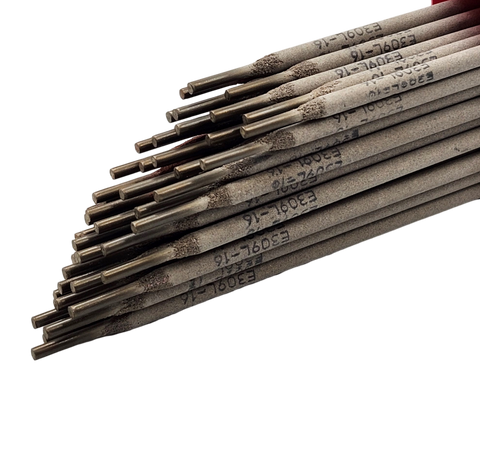
Stainless Steel Stick Electrodes
Stainless steel stick electrodes for austenitic stainless and for dissimilar-metal joints. Stick remains the practical process for stainless repair in the field, where dragging a gas bottle and a TIG setup to the work is not realistic.
Grade selection
- E308L - for 304 and 304L base metal. The general stainless fabrication standard.
- E309L - higher alloy, for joining stainless to carbon steel and for buffer layers. This is the one people get wrong: running 308L on a stainless-to-mild-steel joint dilutes the weld below its required alloy content and gives you a brittle joint that cracks later.
- E316L - molybdenum-bearing, for 316 base metal and chloride-bearing environments.
Run them differently to carbon steel
Stainless electrodes want lower current than a carbon steel electrode of the same diameter, and a short arc. Stainless conducts heat poorly and expands more, so heat input control and interpass temperature matter far more than on mild steel - excess heat distorts the work and damages corrosion resistance.
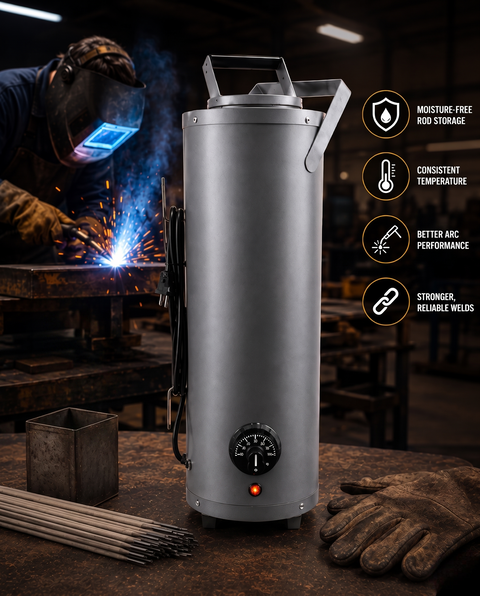
The coating absorbs moisture
Stainless electrode coatings pick up moisture like low-hydrogen carbon steel electrodes do, with the same consequences. Keep them sealed or in an oven.
Clean up is part of the weld
Remove the slag fully and deal with the heat tint. Pickling paste restores the passive layer; leaving the tint means rust along the weld line in service, which customers read as a failed weld.
Free shipping over $175 across Canada. Counter pickup in North York.