Fiber Belts
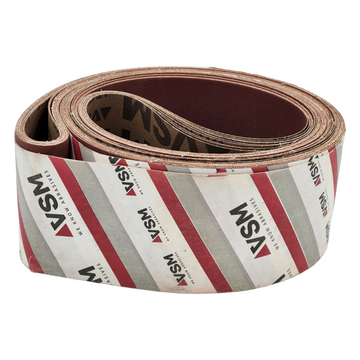
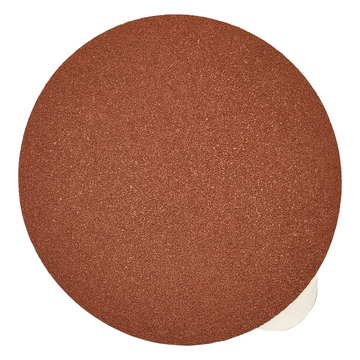
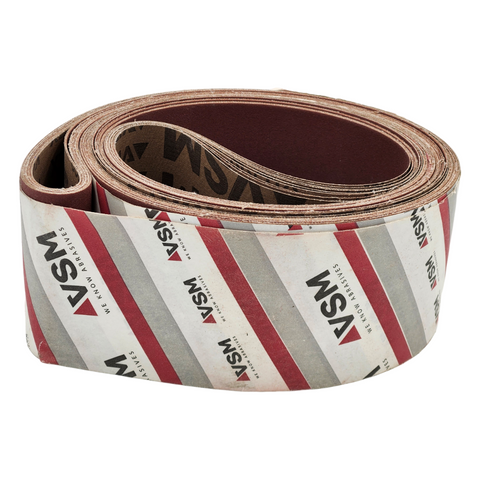
Fiber grinding belts in aluminum oxide and ceramic grain for belt sanders and file belt tools - weld removal, edge work and sustained stock removal.
Ceramic or aluminum oxide - the price difference is not the cost difference
This is the decision on this page, and buying on sticker price is usually the expensive choice.
- Aluminum oxide is the general-purpose grain. It is friable - it fractures as it wears, exposing fresh cutting edges - and on mild steel at moderate volume it is the correct economics.
- Ceramic grain is engineered to self-sharpen under pressure rather than dull. On stainless, hard alloys and sustained heavy removal it lasts several times longer than aluminum oxide and it keeps cutting cool for that entire life.
On stainless the cost comparison is not close. A dulled aluminum oxide belt stops cutting and starts generating heat, and that heat is what causes the discolouration, the distortion and the carbide problems you then spend time correcting. Ceramic costs more per belt and less per part.
Ceramic wants pressure - aluminum oxide does not
Their working requirements are opposite, and this is where ceramic belts get written off unfairly.
Ceramic grain needs firm pressure to fracture the grain and keep fresh edges exposed. Run it light and it glazes, and it will feel like a belt that does not cut. Aluminum oxide, run hard, simply wears out faster and heats the work.
If you switch to ceramic, lean into it.
Keep the work moving and the heat down
A belt presents a long abrasive surface, which is why it removes metal fast - and why it puts heat into a part fast. Keep the work travelling across the belt rather than dwelling in one place, particularly on thin material and on stainless, where a blued patch is a defect and not a cosmetic issue.
Track and tension before you load the work
A belt running off-centre wears on one edge and fails early, and a belt tensioned too loosely slips under the pressure ceramic needs. Check tracking on a dry run each time you fit a belt.
Grit sequence and cross-contamination
Step through grits rather than jumping - a skipped grit leaves marks the finer belt cannot clear. And keep a separate belt for stainless: a belt used on carbon steel embeds iron particles that rust on the finished part.
Free shipping over $175 across Canada. Counter pickup in North York.