
Aluminum Welding
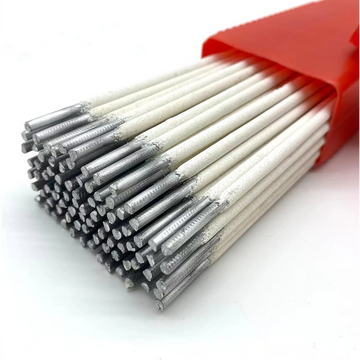
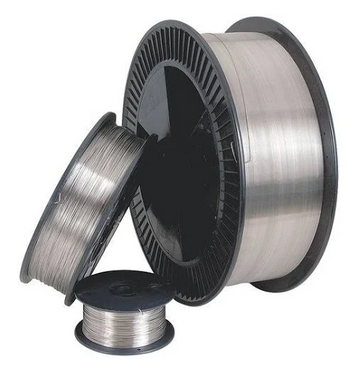
Aluminum filler metal in every process - ER4043 and ER5356 TIG rods and MIG wire, ER5554 marine grade, and E4043 stick electrodes for the repairs where wire is not an option.
4043 or 5356 - this is the decision that matters
Nearly every aluminum filler question comes down to these two, and picking by price rather than by base metal is what produces cracked welds and rejected work.
- ER4043 is silicon-bearing. It flows better, wets in more easily and is far less crack-sensitive on 6000-series extrusions and castings. Lower strength than 5356, and it will not colour-match the parent metal if the part is anodized afterwards - it comes back dark.
- ER5356 is magnesium-bearing. Higher strength, stiffer wire that feeds more reliably through a spool gun, and it anodizes to a close colour match. The correct choice for 5000-series base metal and for structural work where strength governs.
- ER5554 is the marine-grade answer and it exists for a specific reason - see below.
Why 5554 rather than 5356 in heat
Filler alloys above roughly 3% magnesium become susceptible to stress corrosion cracking in sustained service above about 65°C. ER5356 sits above that threshold. ER5554 is formulated below it, which is why it is specified for 5454 base metal and for tanks, vessels and marine work that run warm.
This failure appears months after the weld passed inspection. If the part will live in heat or in salt, the alloy choice is not a preference.
The oxide layer is the whole problem
Aluminum carries an oxide skin that melts at roughly three times the temperature of the metal beneath it. Weld through it and you get inclusions, porosity and a bead sitting on top of the joint rather than fused into it.
Remove it mechanically with a stainless brush kept exclusively for aluminum - a brush that has touched steel deposits iron into the joint - and weld within the shift, because the oxide reforms.
Machine requirements are non-negotiable
TIG on aluminum needs AC. The AC half-cycle is what breaks the oxide up; a DC-only machine cannot do it at any amperage. MIG on aluminum needs a spool gun - soft aluminum wire birdnests in a standard gun liner before it ever reaches the contact tip, and this is the single most common reason a new owner concludes their machine will not run aluminum.
E4043 stick, for when nothing else fits
Aluminum stick electrodes are unfashionable and occasionally indispensable - field repairs on cast aluminum housings, thick sections, and anywhere carrying a bottle and a spool gun is not realistic. Run DC reverse polarity, keep them dry, and expect to chip flux.
Free shipping over $175 across Canada. Counter pickup in North York, and we carry TIG torches, spool guns, tungsten and gas equipment alongside the filler.

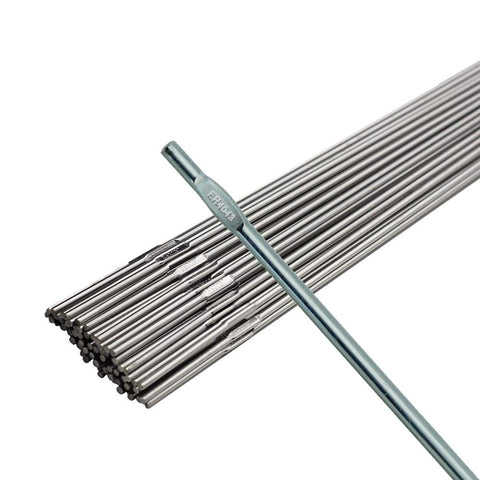
ER4043 Aluminum TIG Rods – 10lbs, 36" Length
$139.00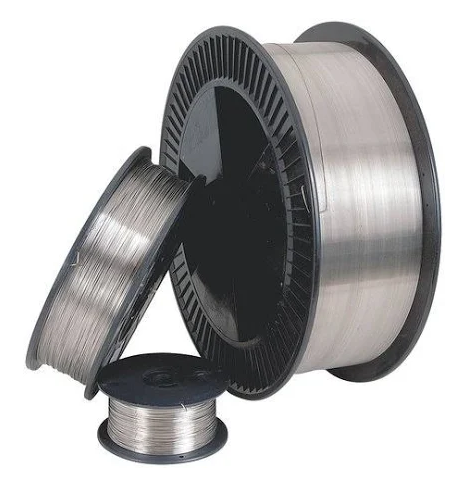
ER5356 Aluminum MIG Welding Wire – 5000 Series Filler
$16.99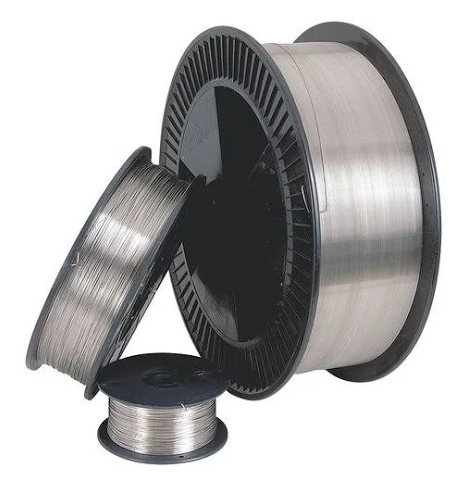
ER4043 Aluminum MIG Welding Wire – 6000 Series Filler
$16.99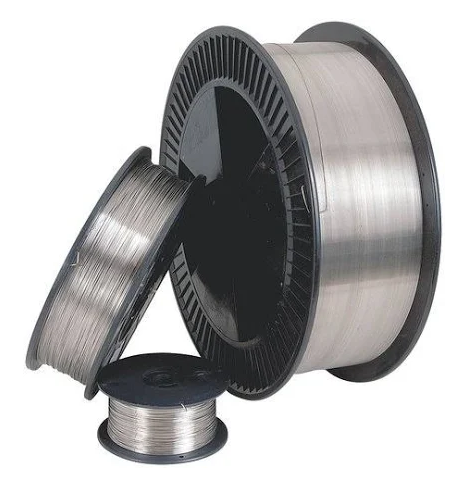
ER5554 Aluminum MIG Welding Wire – Marine Grade
$19.00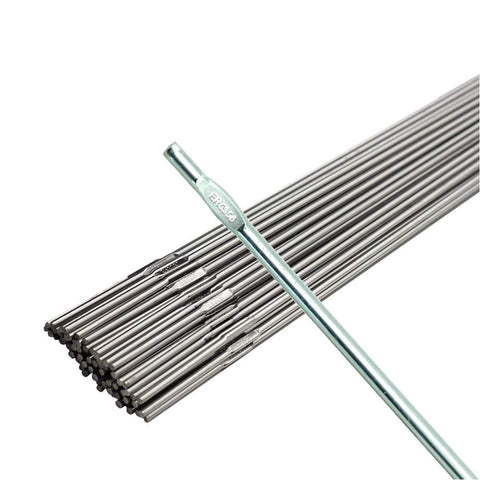
ER5356 Aluminum TIG Rods – 10lbs, 36" Length
$139.00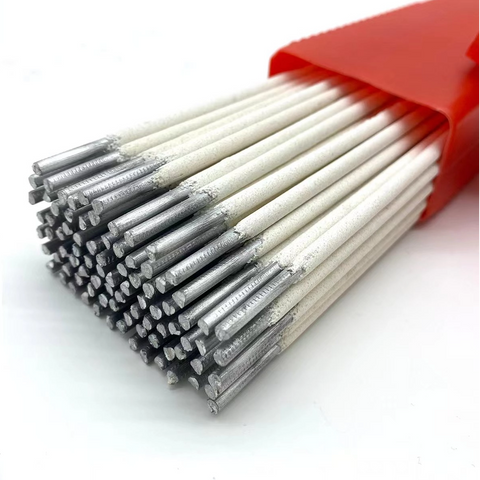
E4043 Aluminum Stick Electrodes – 5lb Sleeve
$143.00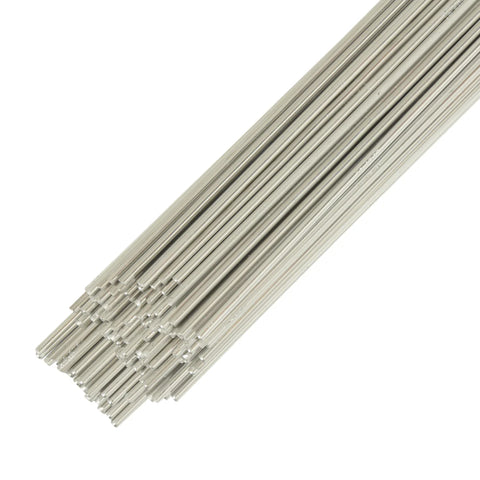
ER5554 Aluminum TIG Rods – 10lbs, 36" Length
$174.90
How to Choose the Right Welding Helmet: Shade Numbers, Safety Standards, and Features
A shade-number-first, CSA/ANSI-grounded buying guide to choosing a welding helmet for MIG, TIG, Stick, and plasma work — fixed vs. auto-darkening, sensors, PAPR, and MapleWeld's lineup...