
Hardfacing
Hardfacing stick electrodes for rebuilding worn surfaces - bucket teeth, crusher jaws, augers, mixer blades, wear plates and anything that loses metal faster than it should.
Hardfacing is maintenance, not fabrication
You are not joining two parts. You are putting metal back onto a surface that abrasion, impact or both have taken away, and doing it in a form that survives longer than the parent metal did. A correctly hardfaced bucket edge outlasts the original by several times, at a fraction of the cost of a replacement part.
The mistake that wastes the most money here is choosing an electrode by hardness number alone. Hardness resists abrasion; it does not resist impact. The two requirements pull in opposite directions, and the right answer depends on which one is actually destroying your part.
Matching the electrode to the wear
- HF24 - severe abrasion. High chromium-iron alloy for sand, cement, mud and earth. Dredger teeth, grab jaws, wear plates, dredge pump parts, augers and tillage tools. Smooth deposit, low friction, long beads. Not for heavy impact on its own.
- HF25 - machinable build-up. Good impact and wear resistance with a deposit you can machine afterwards. Toothed wheels, rollers, sprockets, rails, cams and clutches - and the base layer under a harder facing.
- HF27 - abrasion plus impact, multilayer. Air-hardening deposit that takes many layers without cracking, holding up to 550°C. Bucket edges, sand pump casings, bulldozer teeth, shears, tamping dies, ripper teeth and crusher jaws.
Build the base layer first
Hard deposits laid straight onto worn parent metal crack and spall off. On thick build-up, run HF25 or HF27 as a tough cushion layer, then face it with the abrasion-resistant alloy. The soft layer absorbs the stress the hard layer cannot.
Three layers minimum before you reach the full rated hardness of an air-hardening deposit - the first layer is diluted by the parent metal and will always test softer.
Stringer beads, controlled heat
Deposit in stringers rather than wide weaves and keep interpass temperature down. Check cross-cracking as you go: on high-chromium deposits, fine surface checks across the bead are normal and relieve stress. Cracks running along the bead are not - they mean too much heat or too much unsupported thickness.
Gouge or grind out the old, work-hardened or fatigued surface before you start. Facing over fatigued metal buys you one shift.
Not sure which one your part needs
Describe the part, the material moving across it and how it is failing - worn smooth, chipped, or both - and we will tell you which electrode and how many layers. Getting this call right is worth more than any price difference between the three.
Related stick electrodes: all stick electrodes, cast iron and dissimilar metals.
Counter pickup in North York.
Nothing matches that combination yet.
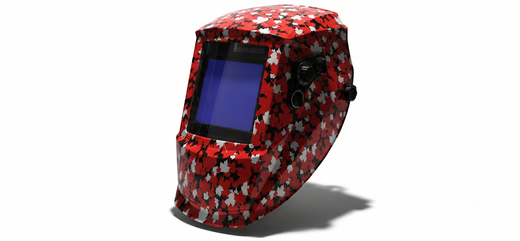
How to Choose the Right Welding Helmet: Shade Numbers, Safety Standards, and Features
A shade-number-first, CSA/ANSI-grounded buying guide to choosing a welding helmet for MIG, TIG, Stick, and plasma work — fixed vs. auto-darkening, sensors, PAPR, and MapleWeld's lineup...