
MIG Wire
Every MIG wire we stock, in one place - carbon steel, stainless, aluminum, flux-cored and metal-cored, in spool sizes from 1kg up to 20kg.
Carbon steel
ER70S-6 is the workhorse. It carries enough silicon and manganese as deoxidisers to tolerate mill scale and light surface contamination, which is why it forgives the material shops actually weld. Copper-free variants are available where copper coating is a contamination concern.
Stainless
308 for 304 base metal, 316 for chloride environments, and 309 for joining stainless to carbon steel. That last one gets chosen wrong most often - using 308 on a dissimilar joint dilutes the weld below its required alloy content and leaves a brittle result. Stainless MIG also needs a tri-mix or low-CO2 blend, not straight CO2.
Aluminum
ER4043 for 6000 series, ER5356 for 5000 series and anywhere the joint will be anodised, ER5554 for elevated-temperature marine service. Feeding aluminum needs a U-groove drive roll, a Teflon or composite liner, minimum tension and the shortest gun you can work with.
Flux-cored and metal-cored
E71T-GS is self-shielded and runs without gas, which is why it dominates outdoor and site work. E71T-1 is gas-shielded and gives a cleaner, higher-quality deposit. Metal-cored wire gives higher deposition rates than solid wire at the same current and is worth evaluating on production fillet work.
Match the drive rolls to the wire
V-groove for solid wire, knurled for flux-cored, U-groove for aluminum. Running the wrong roll deforms or shaves the wire, and the resulting feed faults get blamed on the machine.
Spool size is an economics decision
Large spools cost less per kilogram and are the right call on production work. Small spools make sense for occasional use and for aluminum, where a part-used spool sitting on an open feeder picks up oxide that ends up in the weld as porosity.
Free shipping over $175 across Canada. Bulk pricing and counter pickup at our North York location.
 Steel Welding
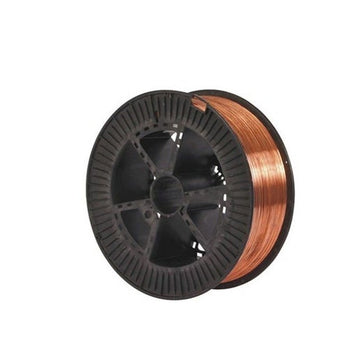
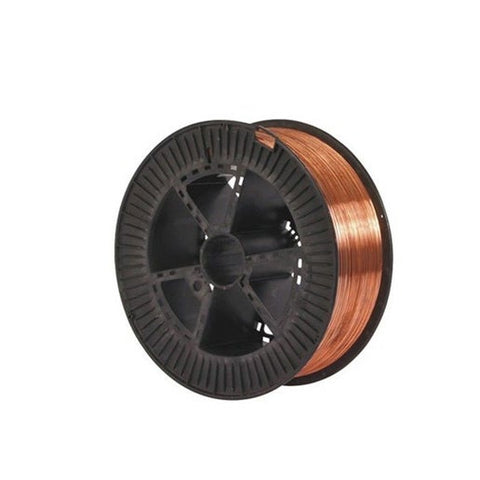
ER70S-6 Carbon Steel MIG Welding Wire – 20kg (44 lb.) Spool
$93.00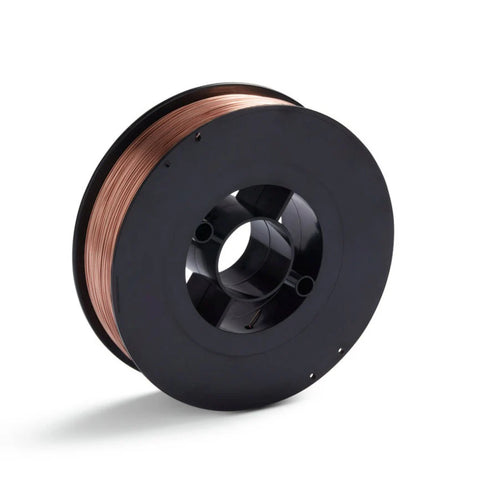 Steel Welding
ER70S-6 Carbon Steel MIG Welding Wire – 5kg (11 lb.) Spool
$44.00 Steel Welding
E71T-GS Self-Shielded Flux-Cored Welding Wire
$25.18 Steel Welding
E71T-1 Flux-Cored Welding Wire
$89.00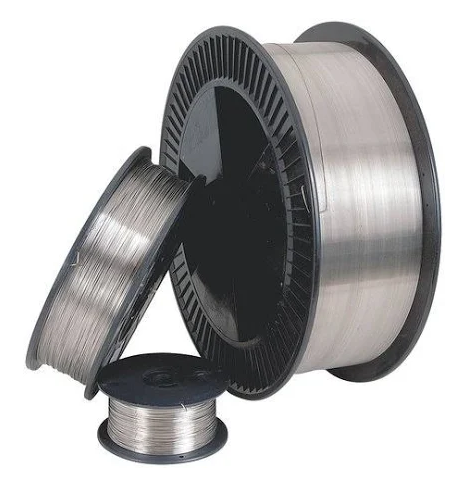 Aluminum Welding
Nexalloy ER5356 Aluminum MIG Welding Wire – 5000 Series Filler
$16.99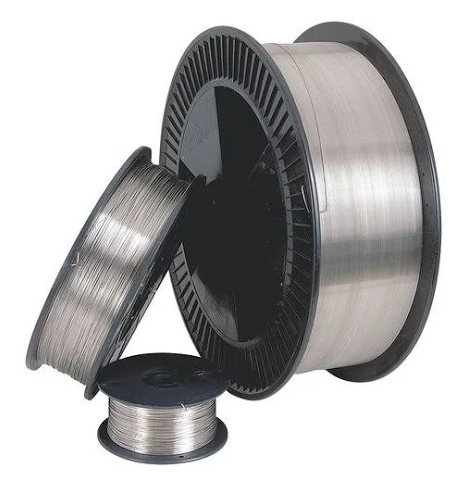 Aluminum Welding
Nexalloy ER4043 Aluminum MIG Welding Wire – 6000 Series Filler
$16.99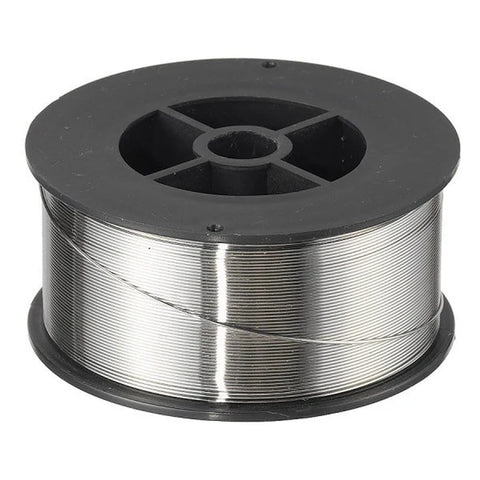 Stainless Steel Welding
ER309 Stainless Steel MIG Welding Wire
$209.00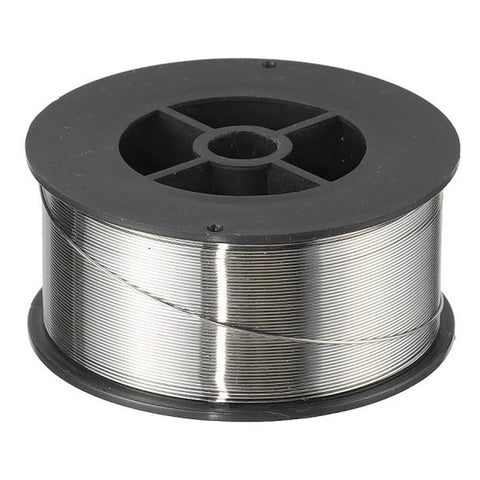 Stainless Steel Welding
ER316 Stainless Steel MIG Welding Wire
$49.00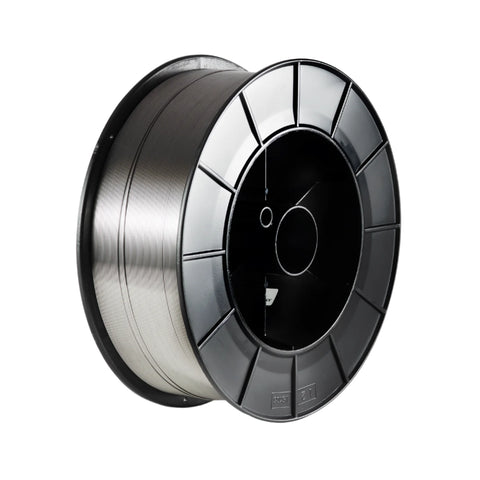 Steel Welding
70C-6M Metal Cored MIG Welding Wire
$239.85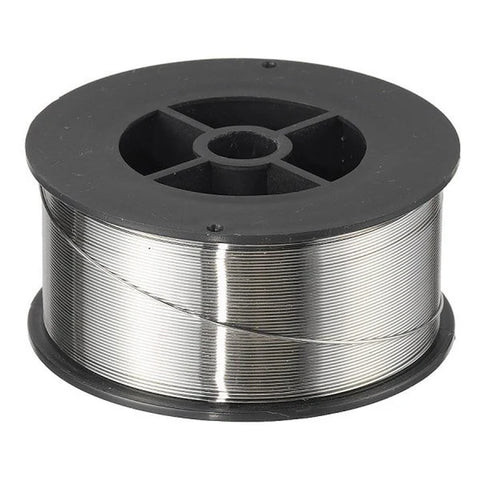 Stainless Steel Welding
ER308 Stainless Steel MIG Welding Wire
$59.00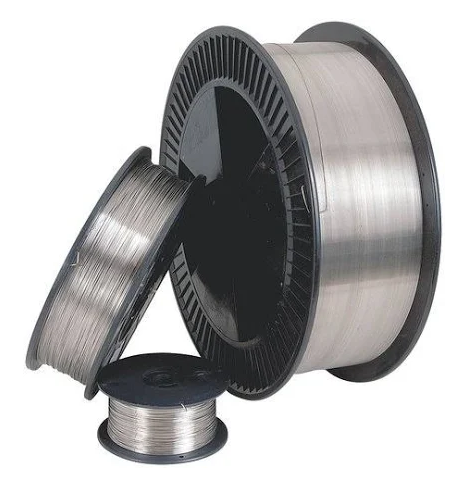 Aluminum Welding
Nexalloy ER5554 Aluminum MIG Welding Wire – Marine Grade
$19.00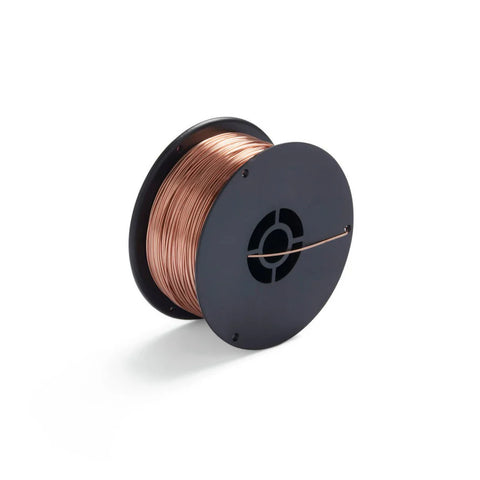 Steel Welding
ER70S-6 Carbon Steel MIG Welding Wire – 1kg (2.2 lb.) Spool
$15.90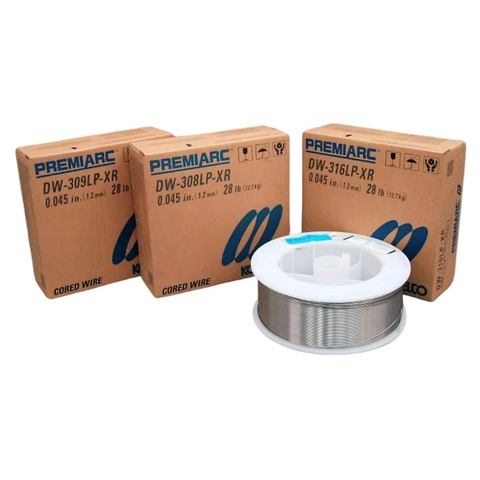 Stainless Steel Welding
Kobelco Stainless Steel Flux Cored Welding Wire
$898.00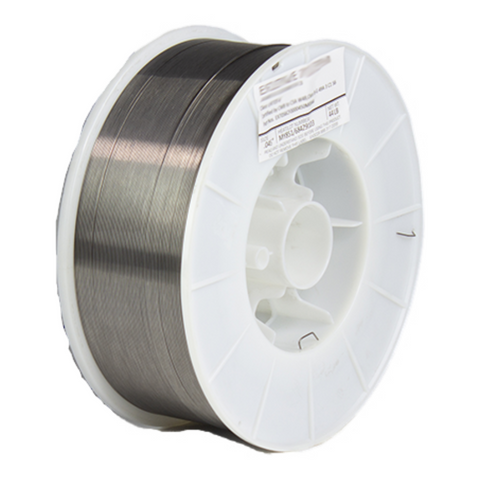 Steel Welding