
Work Gloves
General handling gloves for the shop floor - drivers, mechanics and leather work gloves for the hours between welds, when material is being moved, fitted, ground and cleaned up.
A work glove is not a welding glove
Worth stating plainly, because it is the most common error in shop glove buying. Welding gloves are built for heat and spatter and are deliberately thick and clumsy. Work gloves are built for grip and dexterity and offer little heat protection. Using either in the other's role means the wrong protection and, usually, the glove coming off and staying off.
Choosing by task
- Drivers gloves - unlined split cowhide, rolled cuff. The general-purpose choice for material handling, loading and yard work. Simple, tough, cheap enough to keep several pairs.
- Mechanics gloves - air-cushioned palm with a stretch back. Far more dexterity than leather, with padding where a wrench or a plate edge lands. For assembly, fit-up and machine work where you need to feel what you are doing.
- Deerskin and sheepskin - softer and more supple than cowhide, and they stay that way after getting wet. Worth the extra on work where grip and feel matter all day.
Fit determines whether they get worn
A glove that is too large costs dexterity and catches on things; too small and it comes off within the hour. Sizing varies noticeably between manufacturers, so if you are ordering for a crew, get one sample pair first and size from that.
Wet leather is finished leather
Leather gloves that get soaked and then dry near a heater go hard and crack. Dry them slowly, away from direct heat.
For welding gloves specifically, see the Stick and MIG Gloves and TIG Gloves categories - those are selected by process and heat exposure rather than by grip.
Free shipping over $175 across Canada. Counter pickup in North York.
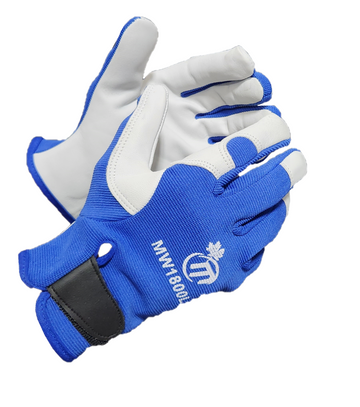

MW1800 Sheepskin Leather Work Gloves with Blue Stretchy Fourway Fabric & Adjustable Velcro Closure
$13.60
MW2100 Polka Dot Grip Work Gloves with Black Amara Leather & Adjustable Velcro Closure
$25.84
MW1400 Top-Grade Cowhide Leather Work Gloves with Cotton Fleece Lining
$19.20
MW1100 Premium Sheepskin Leather Gloves with Sandwiched Steel Chain
$25.84
MW1200 Lightweight Goatskin Leather Gloves with Shirred Cuff
$10.20
MW1900 Premium Goatskin Leather Work Gloves with Black Polyester Back and Cotton Inner Lining
$12.92
MW1700 Goatskin Lightweight Leather Gloves with Cotton Back and Elastic Stretch Knit Wrist
$11.56
2680 Cowhide Mechanics Gloves – Air-Cushioned Palm, Spandex Back
$19.79
1414 Cowhide Drivers Gloves – Split Cowhide Unlined Rolled Cuff
$13.83
2670 Goatskin Mechanics Gloves – White Grain Goatskin, Black Spandex
$23.90