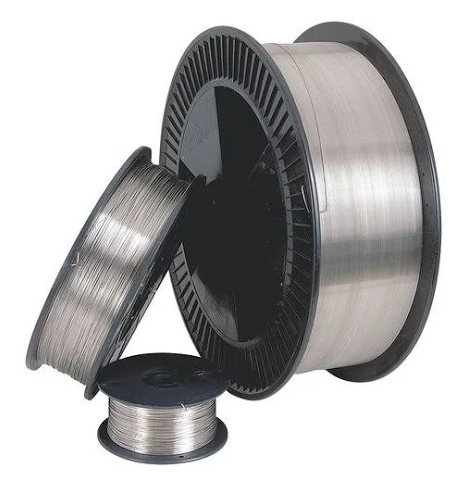
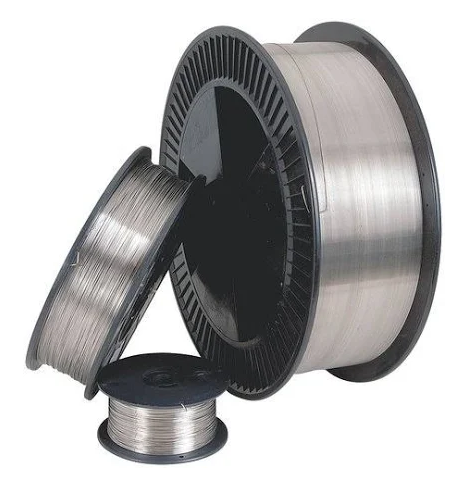
Aluminum MIG Wire
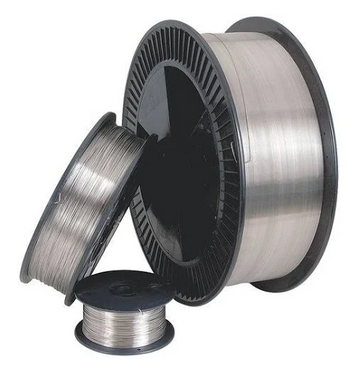
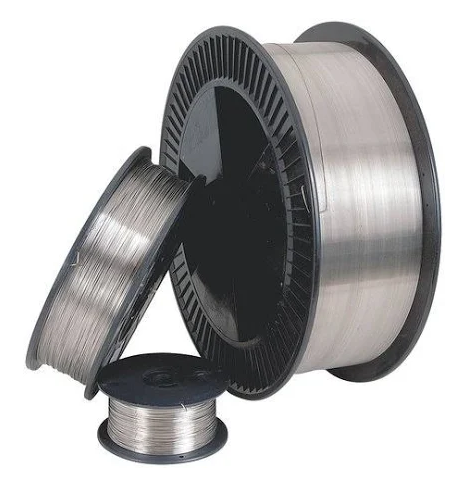
Aluminum MIG wire, selected by base alloy rather than by habit. Getting the filler wrong on aluminum does not produce a weaker weld so much as a cracked one.
Matching filler to base alloy
- ER4043 - silicon-bearing, lower melting point, flows well and is more crack-resistant on 6000 series alloys. The default for 6061 and most extrusion work. Does not anodise to match, and is not suitable where the joint will see sustained high temperature.
- ER5356 - magnesium-bearing, stronger and more ductile, anodises closer to the base metal. The choice for 5000 series and for structural and marine work. Stiffer wire, which feeds better than 4043.
- ER5554 - for 5454 base metal and elevated-temperature service, where 5356 would be vulnerable to stress corrosion.
Feeding aluminum is the real problem
Aluminum wire is soft. It shaves, birdnests and jams in equipment set up for steel. What it needs: a U-groove drive roll, a Teflon or composite liner, minimum drive tension, and the shortest gun you can work with. A spool gun or push-pull gun removes most of the difficulty outright.
Clean means mechanically clean
Aluminum carries an oxide layer that melts far above the metal underneath it. Remove it with a dedicated stainless brush kept exclusively for aluminum, immediately before welding, and degrease first - brushing oil into the joint just spreads it.
Free shipping over $175 across Canada. Counter pickup in North York.