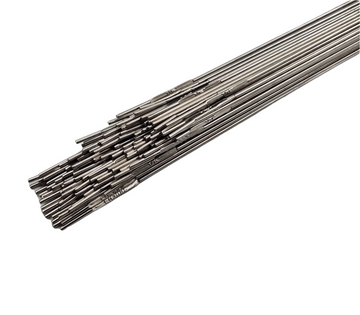
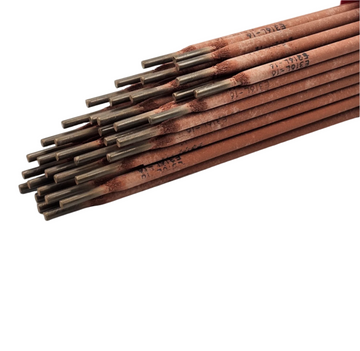
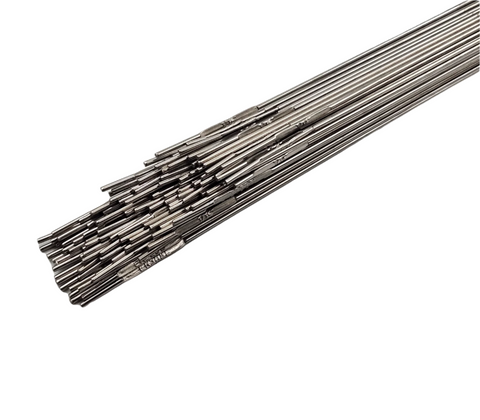
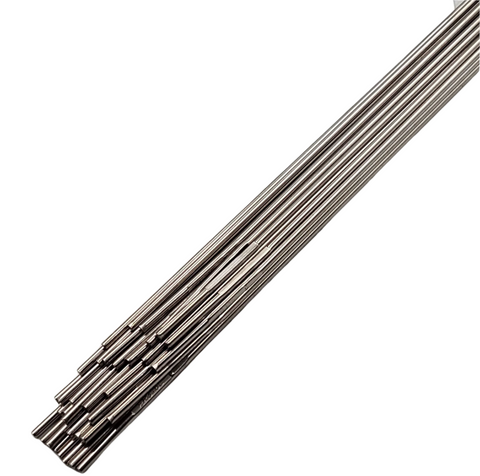
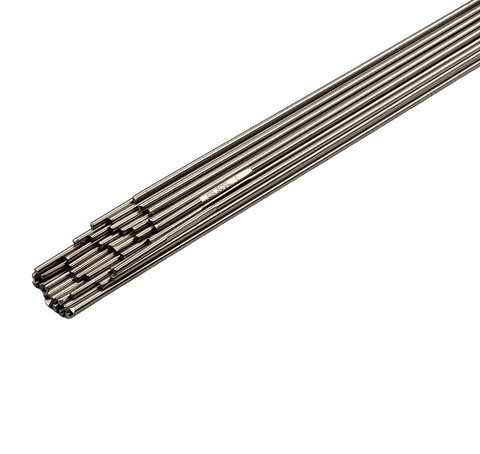
Stainless Steel TIG Rods
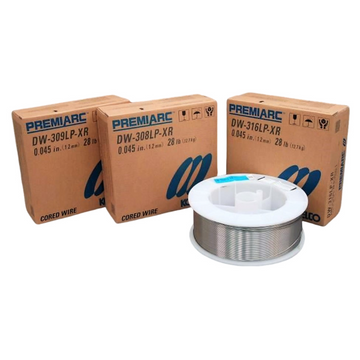
Stainless steel TIG filler rods - ER308L for 304, ER316L for 316 and chloride service, ER309L for joining stainless to carbon steel.
Match the rod to the base metal
- ER308L - the default for 304 and 304L. The overwhelming majority of stainless TIG work on this continent is 304 base metal welded with 308L.
- ER316L - for 316 and 316L base metal. The molybdenum addition is what buys pitting resistance in chlorides, which is why it belongs in marine, food processing and chemical service. Using 308L on a 316 part throws that resistance away and the part corrodes where the weld is.
- ER309L - for stainless to carbon steel, and as the buffer layer when overlaying carbon steel with stainless. Its higher alloy content absorbs the dilution from the carbon side that would otherwise leave the weld metal short of chromium and nickel.
What the L actually buys you
The L is low carbon, and it is not a minor variant. Carbon above about 0.03% precipitates as chromium carbide at the grain boundaries in the heat-affected zone - the chromium that forms it is chromium no longer available to resist corrosion. The result is sensitisation: a part that passes inspection and then corrodes in a line beside the weld.
Low-carbon filler is the cheapest insurance in stainless welding. Buy L grades and stop thinking about it.
Back-purge, or accept sugaring
The root side of a stainless weld oxidises without shielding. That black, crusty sugared surface is oxidised weld metal with no corrosion resistance left, and on pipe or vessel work it is a rejection.
Argon back-purge on anything where the reverse side matters. On open work, a purge dam and patience costs less than cutting the joint out.
Heat tint tells you how you did
Straw and light gold are acceptable. Blue, purple and grey mean too much heat in the joint, and on a corrosion-critical part that discolouration has to be removed chemically or mechanically - brushing it does not restore the passive layer.
Control interpass temperature, keep the arc tight and travel deliberately. Stainless holds heat far longer than carbon steel and it distorts accordingly.
Keep stainless tooling separate
A brush, a grinding disc or a file that has touched carbon steel embeds iron into the stainless surface, and that iron rusts. Dedicate the abrasives and the brushes, and store stainless stock off steel benches.
Free shipping over $175 across Canada. Counter pickup in North York. We carry tungsten, gas lenses, cups and back caps alongside the filler.